The Pharisee and the Tax Collector
We all found this chapter very challenging. It made us look into our own hearts and see what secret sins reside there…
Here are a few things we discussed:
Refined sins:
If we are honest with ourselves we can all see refined sins in our hearts that have gone unchecked and untamed for years. Maybe we have subconsciously justified them because as Jerry suggests ‘These are sins of nice people, sins that we can regularly commit and still retain our positions as elders, deacons, Sunday school teachers, Bible study leaders, and yes, even full-time Christian workers’ pg 33 We can go about our Christian lives with all the right, and Godly actions, and still commit these sins in our hearts; nobody sees… but God sees.
The chapter on refined sins beginning on page 33 was very challenging. I personally identified with Jerry Bridges when he said 'As I looked at my own life, one of the first [refined sins] that came to mind was the tendency to judge others and to speak critically of them to other people. That this sin came to mind so quickly surprised me, because I don’t think of myself as a critical or judgemental person. Perhaps that is part of the problem. This seems to be such and acceptable vice among believers that we don’t even recognize it unless it is flagrant – and always in someone else.’ page 33. I started to think of occasions when I have thought this way. When I have looked at another’s beliefs, philosophy or even parenting, and spoken of them to others. Even when I havn’t spoken about them, I have judged them in my heart. We felt convicted when we read that... ‘We are simply not to say anything about someone else that we wouldn’t want to eventually reach that person’s ear. Even criticism addressed to someone should be given only with the goal of benefiting that person.’ Page 35. Is our critisism really benefiting that person? We are to defend the truth, and speak to people about the truth, but it needs to be motivated by love and tempered with kindness. Is our motive to help them, rather than make ourselves feel superior? Are we motivated by love? Do we walk in the fruits of the spirit?
The Seriousness of Sin
We know sin is very serious. Of course we believe that all sin offends Gods. We acknowledged that we certainly give verbal assent to this. But when we tolerate these refined sins in our own hearts are we not saying ‘this little sin isn’t so bad’. ‘We forget or perhaps have never learned, how seriously God regards all sin.’ Pg 36. ‘Again, the seriousness of sin is not simply measured by its consequences, but by the authority of the One who gives the command.’ Page 37
In light of the fact that often these ‘refined sins’ are hidden from others, and we are not challenged to change by those around us, how do we recognise our sin. Meditating and studying Gods Word, shows us our sin in James 1:23-25 we see Gods Word as a mirror revealing to us our true character and showing us our need of Grace. Psalm 119:11 says ‘Your Word I have hidden in my heart, that I might not sin against You.’ Psalm 119:105 ‘Your word is a lamp to my feet and a light to my path’. I’m sure there are many other scriptures you could find to show us how important it is to spend time in and meditate on Gods word, so that we recognise sin, and hate it for what it is.
Realising that these sins are so ingrain in us as humans only magnifies the glory of Gods Grace and shows us that without the gift of faith it is impossible to please God. We loved the quote he gave from a Puritan preacher ‘Even our tears of repentance need to be washed in the blood of the Lamb’ pg 44. Even our most holy acts are sinful.
Complacency
Since we have been saved by Grace; that is a free unmerited gift of God, to sinners. Shouldn't we be excited and willing to share it with others!? Lets not be afraid to share the Gospel. Let us not be ashamed or fearful.
Saturday, February 16, 2008


Tuesday, February 12, 2008
Guidance and the Voice of God by Philip Jensen
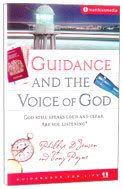
This book was recommended at our last Book Club to help give us a true biblical understanding of the voice of God and how He speaks to us today through his Word.
Publishers Description : "Guidance and the Voice of God has recently been added to Matthias Media's new series: Guidebooks for Life. As the series unfolds, it will deal with the important nuts-and-bolts topics that Christians need to know about as we walk each day with our Master.
- How do I know what God wants me to do?
- How can I make decisions which are in line with his will?
- If God still speaks, will I recognize his voice?
Guidance and the Voice of God charts a way through these often confusing issues, and shows how for those who have ears to hear, God is still speaking loud and clear through his Son."
Monday, February 04, 2008
Decision Making and the Will of God

Decision Making and the Will of God by Garry Frieson
I'm adding this book to our recommended reading list. It was recommended in our last book club meeting by Deb to aid us in our understanding of the Will of God.
A few years back our church held a camp at which we focused on the Will of God. It was very helpful in clarifying my understanding of Gods will and how he guides us. Understanding that God has given us the tools and the guidelines through his Word to help us follow God Will in every decision of our lives was like being set free. The lectures where given by John Paterson, who also recommended this book.
Publishers Description: 'Does God have a perfect will for each Christian? Can you be absolutely sure you’ve found God’s individual will for your life? Garry Friesen examines the traditional view of God’s will, then sets forth a different view that more accurately reflects biblical teaching. This new edition of Decision Making takes up the practical issues of choosing a mate, picking a career, giving of one’s resources, and areas of disagreement between Christians to give readers a new approach to knowing the will of God. Mr. Friesen also addresses many of the arguments that have surfaced since the original printing of this book over twenty-four years ago. Does God Have a Perfect Will for Your Life? Does God have a perfect will for each Christian? Can you be absolutely certain of God’s specific will for your life? In this expanded twenty-fifth anniversary edition of his highly acclaimed work, Garry Friesen examines the prevalent view on God’s will today and provides a sound biblical alternative to the traditional teaching of how God guides us. This new edition includes these helpful resources: Study guide for small groups Responses to Frequently Asked Questions Guide to painless Scripture memorization Friesen tackles the very practical issues of choosing a mate, picking a career, and giving in this fresh and liberating approach to decision making and the will of God.'
Story Behind the Book: Most Christians have been taught how to find God’s will, yet many are still unsure whether they’ve found it. God does guide His people, but the question is, How does He guide? After putting out a fleece to decide which college to attend, Garry Friesen began pondering why it was so hard to find God’s will when he had so sincerely sought it. Was he the only one who did not have 100 percent clarity for every decision? Then a new possibility struck-perhaps his understanding of the nature of Gods will was biblically deficient. Maybe there was a better way to understand HOW God guides.
Friday, February 01, 2008
Book Discussions: The Discipline of Grace
Welcome back to the book club for another year!
We had a first book club meeting last night, and we’ve begun reading Jerry Bridges Book, The Discipline of Grace. Some of us had read the first chapter, but others hadn’t so our discussion revolved mainly around grace, and some of the points in the first chapter.
In our discussions, we recognised again, how important Grace is and how an understanding of the ‘Doctrines of Grace’ is both liberating and motivating in our walk with God. Liberating because we realise that our salvation is not linked to our ‘performance’ as Christians. We know that God will preserve us, and that he didn’t choose us because of our ‘performance’. Grace is also motivating because we understand the magnitude and glory of what Christ has done for us, and that he did it while we were still sinners, it spurs us on to live a life that glorifies and pleases Him. Preaching the gospel to ourselves daily keeps grace in our sights and leads us to an even greater love for our Saviour.
For those of our readers who have not heard or understood the biblical doctrines of grace click here. This link sumarises the doctrines, as well as their corresponding errors. The link also provides biblical supports for the Doctrines of Grace.
When grace is not properly understood, our motivation for pursuing holiness and doing good becomes distorted. Rather than being obedient and living holy lives to glorify God and please Him, we do it to keep our salvation (though we barely recognise that this is what we are doing). We try keep ourselves in a good relationship with God and prevent ourselves from ‘backsliding’ through doing good. The problem is of course, that our good can never be good enough.
‘We need to continue to hear the gospel ever day of our Christian lives. Only a continuous reminder of the gospel of God’s grace through Christ will keep us from falling into good-day – bad-day thinking, wherein we think our daily relationship with God is based on how good we’ve been.’
It is only the joy of hearing the gospel and being reminded that our sins are forgiven in Christ that will keep the demands of discipleship from becoming drudgery. It is only gratitude and love to God that comes from knowing that He no longer counts our sins against us (Romans 4:8) that provides the proper motive for responding to the claims of discipleship.’ Pg 21
At the next meeting on the 14th of February we will be discussing Chapter 1: How Good is Good Enough? and Chapter 2: The Pharisee and the Tax Collector
We had a first book club meeting last night, and we’ve begun reading Jerry Bridges Book, The Discipline of Grace. Some of us had read the first chapter, but others hadn’t so our discussion revolved mainly around grace, and some of the points in the first chapter.
In our discussions, we recognised again, how important Grace is and how an understanding of the ‘Doctrines of Grace’ is both liberating and motivating in our walk with God. Liberating because we realise that our salvation is not linked to our ‘performance’ as Christians. We know that God will preserve us, and that he didn’t choose us because of our ‘performance’. Grace is also motivating because we understand the magnitude and glory of what Christ has done for us, and that he did it while we were still sinners, it spurs us on to live a life that glorifies and pleases Him. Preaching the gospel to ourselves daily keeps grace in our sights and leads us to an even greater love for our Saviour.
For those of our readers who have not heard or understood the biblical doctrines of grace click here. This link sumarises the doctrines, as well as their corresponding errors. The link also provides biblical supports for the Doctrines of Grace.
When grace is not properly understood, our motivation for pursuing holiness and doing good becomes distorted. Rather than being obedient and living holy lives to glorify God and please Him, we do it to keep our salvation (though we barely recognise that this is what we are doing). We try keep ourselves in a good relationship with God and prevent ourselves from ‘backsliding’ through doing good. The problem is of course, that our good can never be good enough.
‘We need to continue to hear the gospel ever day of our Christian lives. Only a continuous reminder of the gospel of God’s grace through Christ will keep us from falling into good-day – bad-day thinking, wherein we think our daily relationship with God is based on how good we’ve been.’
It is only the joy of hearing the gospel and being reminded that our sins are forgiven in Christ that will keep the demands of discipleship from becoming drudgery. It is only gratitude and love to God that comes from knowing that He no longer counts our sins against us (Romans 4:8) that provides the proper motive for responding to the claims of discipleship.’ Pg 21
At the next meeting on the 14th of February we will be discussing Chapter 1: How Good is Good Enough? and Chapter 2: The Pharisee and the Tax Collector
Monday, December 17, 2007
Merry Christmas
Thank you to everyone who encouraged me to continue with the online book club this year, and for your feedback.
I pray you all have a wonderful Christmas and New Year.
I look forward to seeing some of you comment next year.
lots of love
Amy
I pray you all have a wonderful Christmas and New Year.
I look forward to seeing some of you comment next year.
lots of love
Amy
Faithful Women and Their Extraordinary God - Chapter 5 - Helen Roseveare
I know I’ve missed the last two chapters that we read from ‘Faithful Women and Their Extraordinary God’. Sorry to those of you who are reading along with us. Things have been quite busy the last few weeks and I even missed a book club my self.
I did however enjoy reading the chapters, and I hope you found them encouraging and challenging.
Chapter 5: Helen Roseveare – Faithful in Loss
I’d like to share with you a few of the things we discussed in our book club meeting.
Beginnings: Some of us where surprised that Helen found such Godly companions in university who lead her to a deeper relationship with the Lord. Page 143-145. Some including myself had understood university to be a godless place, but on discussing this point we found that those of us who had attended university did not find it to be a godless place and had themselves found Godly friends and teachers.
Peaks and Valleys: I could relate to her description of the peaks and valleys in her life, as it reminded me of my own view of spiritual life when I was still a Charismatic Pentecostal. Though the language was different. We said we ‘felt dry’ or in the ‘wilderness’.
“I found frequently that I climbed in glorious sunshine… my face set determinedly for the nearest peak I could see. As I reached it, I revelled in the sense of achievement and victory and in the glorious view…” pg 147 We noted that the ‘the sense of achievement’ she describes suggests that the spiritual heights and ‘peaks’ where the result of her own effort. The peaks and valleys she described where from her perspective; how she felt she was doing in her walk with the Lord. In reality, this high feeling may be self righteousness, and the low points when she felt a sense of failure… “As I went down from the present peak into the valley between the mountains, I was often shadowed by the very peak I had been enjoying. This I interpreted in a sense of failure and this often led to despair…” May in fact, from Gods perspective have been the times when she was closest to the Lord and realised that she needed Christ more. Maybe God brings us low in to the valleys, to show us that our effort alone is not satisfactory to bring us into a right relationship with God, but that it is all Christ. What we see as valleys, may be the peaks God sees.
It is easy to fall into a sense of self righteous achievement. Sometimes even when we try to do the right thing, by spending more time in the word, getting up early to pray and have devotions, and do lots of good things for others, we feel like we’re doing really well it can be spoiled by our ‘revelling in our own sense of achievement’ rather than remembering that it is God’s achievement. It reminds me a bit of Mary and Martha.
Learning from her African brethren: The Africans she was there to minister to and along side taught her a lot about the Lord that she could not have learned at home in England. They exhibited a very Christ like love to her that she hadn’t seen before. I also found it interesting how the colour of her skin effected her. Page 159 “Pastor Ndugu… leaned toward me. “Helen… why can’t you forget for a moment that you are white? You’ve helped so many Africans to find cleansing and filling and joy in the Holy Spirit through the blood of Jesus Christ. Why don’t you let Him do for you what He has done for so many others?”
He … opened up to me hidden areas in my heart that I had hardly even suspected, particular this one of race prejudice. I was horrified…” She came to teach them, and yet it was they who taught her so much.
Gods Answers prayers:
How amazing was Gods answer to prayer on page 157. The providence of God is truly amazing as God answered the prayer 7 months earlier before the need had arisen or the words of the prayer were even spoken. What an impact such a specific answer to prayer must have been for the little girl who prayed. We should not be surprised.
Suffering: It is difficult to read about the things she suffered at the hands of the Guerrilla’s (Simbas) as I found myself thinking ‘why didn't God have protect her’. We discussed how ‘Gods Best’ is not always what we expect or want. When we read in Romans 8:28 "And we know that all things work together for good to those who love God, to those who are the called according to His purpose” we often think of Gods ‘good’ as our physical protection, but it is not always so. We talked about the very personal example of one of our friends who’s cousin was in a car accident and left brain damaged. Everyone prayed that he would get well if it was the Lords will, but he did not. Most thought that his recovery or healing was best. But 'Gods best' was the conversion of the young mans family due to the accident and the injury. God's best; End result, the salvation of others.
God didn’t protect Helen from rape, abuse and beating, but he used her “They’re not attacking you. They are attacking me. I’m just using your body to show myself to the people around you.” Page 166. Because of what she’d been through she was able to help a young nun “One young nun had been raped and felt as if she’d betrayed God and her promises to God. Because of her similar experience, Helen was able to break through the woman’s despairing barrier, as no one else could.” Page 166. She was also able to 'protect some fo the other women from undergoing a new trauma they might posssibly have escaped so far.' page 167
It was also encouraging as it shows us that we can suffer terrible trauma and survive. In fact it often changes our perspective an forces us to look toward heaven.
Philippians 3:10 “that I may know Him and the power of His resurrection, and the fellowship of His sufferings, being conformed to His death”
I did however enjoy reading the chapters, and I hope you found them encouraging and challenging.
Chapter 5: Helen Roseveare – Faithful in Loss
I’d like to share with you a few of the things we discussed in our book club meeting.
Beginnings: Some of us where surprised that Helen found such Godly companions in university who lead her to a deeper relationship with the Lord. Page 143-145. Some including myself had understood university to be a godless place, but on discussing this point we found that those of us who had attended university did not find it to be a godless place and had themselves found Godly friends and teachers.
Peaks and Valleys: I could relate to her description of the peaks and valleys in her life, as it reminded me of my own view of spiritual life when I was still a Charismatic Pentecostal. Though the language was different. We said we ‘felt dry’ or in the ‘wilderness’.
“I found frequently that I climbed in glorious sunshine… my face set determinedly for the nearest peak I could see. As I reached it, I revelled in the sense of achievement and victory and in the glorious view…” pg 147 We noted that the ‘the sense of achievement’ she describes suggests that the spiritual heights and ‘peaks’ where the result of her own effort. The peaks and valleys she described where from her perspective; how she felt she was doing in her walk with the Lord. In reality, this high feeling may be self righteousness, and the low points when she felt a sense of failure… “As I went down from the present peak into the valley between the mountains, I was often shadowed by the very peak I had been enjoying. This I interpreted in a sense of failure and this often led to despair…” May in fact, from Gods perspective have been the times when she was closest to the Lord and realised that she needed Christ more. Maybe God brings us low in to the valleys, to show us that our effort alone is not satisfactory to bring us into a right relationship with God, but that it is all Christ. What we see as valleys, may be the peaks God sees.
It is easy to fall into a sense of self righteous achievement. Sometimes even when we try to do the right thing, by spending more time in the word, getting up early to pray and have devotions, and do lots of good things for others, we feel like we’re doing really well it can be spoiled by our ‘revelling in our own sense of achievement’ rather than remembering that it is God’s achievement. It reminds me a bit of Mary and Martha.
Learning from her African brethren: The Africans she was there to minister to and along side taught her a lot about the Lord that she could not have learned at home in England. They exhibited a very Christ like love to her that she hadn’t seen before. I also found it interesting how the colour of her skin effected her. Page 159 “Pastor Ndugu… leaned toward me. “Helen… why can’t you forget for a moment that you are white? You’ve helped so many Africans to find cleansing and filling and joy in the Holy Spirit through the blood of Jesus Christ. Why don’t you let Him do for you what He has done for so many others?”
He … opened up to me hidden areas in my heart that I had hardly even suspected, particular this one of race prejudice. I was horrified…” She came to teach them, and yet it was they who taught her so much.
Gods Answers prayers:
How amazing was Gods answer to prayer on page 157. The providence of God is truly amazing as God answered the prayer 7 months earlier before the need had arisen or the words of the prayer were even spoken. What an impact such a specific answer to prayer must have been for the little girl who prayed. We should not be surprised.
Suffering: It is difficult to read about the things she suffered at the hands of the Guerrilla’s (Simbas) as I found myself thinking ‘why didn't God have protect her’. We discussed how ‘Gods Best’ is not always what we expect or want. When we read in Romans 8:28 "And we know that all things work together for good to those who love God, to those who are the called according to His purpose” we often think of Gods ‘good’ as our physical protection, but it is not always so. We talked about the very personal example of one of our friends who’s cousin was in a car accident and left brain damaged. Everyone prayed that he would get well if it was the Lords will, but he did not. Most thought that his recovery or healing was best. But 'Gods best' was the conversion of the young mans family due to the accident and the injury. God's best; End result, the salvation of others.
God didn’t protect Helen from rape, abuse and beating, but he used her “They’re not attacking you. They are attacking me. I’m just using your body to show myself to the people around you.” Page 166. Because of what she’d been through she was able to help a young nun “One young nun had been raped and felt as if she’d betrayed God and her promises to God. Because of her similar experience, Helen was able to break through the woman’s despairing barrier, as no one else could.” Page 166. She was also able to 'protect some fo the other women from undergoing a new trauma they might posssibly have escaped so far.' page 167
It was also encouraging as it shows us that we can suffer terrible trauma and survive. In fact it often changes our perspective an forces us to look toward heaven.
Philippians 3:10 “that I may know Him and the power of His resurrection, and the fellowship of His sufferings, being conformed to His death”
Saturday, November 10, 2007
Faithful Women and Their Extraordinary God - Chapter 2 - Lilias Trotter
We had much to discuss about Lilias. She was an amazing and determined woman, who did her best for her God.
The Higher life movement
Lilias attended her first Higher life movement meeting when she was 19 and it seems this movement had a great influence on her life. page 43
The Higher Life movement seemed unknown to us all so I thought I’d find out about it.
Whilst reading this chapter the term ‘Higher Life’ seemed to sit at the very edge of my memory as somehow familiar and I wondered whether there was any connection to my past Christian experience in the Pentecostal/Charismatic Movement. On further research, the memories came flooding back.
This statement about the higher life movement from Wikepedia sums up much of what I was taught whilst a Pentecostal. “The main idea of the Higher Life movement is that the Christian should move on from his initial conversion experience to also experience a second work of God in his life. This work of God is called “entire sanctification,” “the second blessing,” “the second touch,” “being filled with the Holy Spirit,” and various other terms. Higher Life teachers promoted the idea that Christians who had received this blessing from God could live a more holy, that is less sinful or even a sinless, life. This teaching has its roots in John Wesley’s doctrine of Christian perfection.” http://en.wikipedia.org/wiki/Higher_Life_movement
The Higher Life Movement was one of the precursors to the modern Pentecostal movement. ‘Another predecessor to Pentecostalism was the Keswick "Higher Life" movement which flourished in England after 1875. Led at first by American holiness teachers such as Hannah Whitall Smith and William E. Boardman, the Keswick teachers soon changed the goal and content of the "second blessing" from the Wesleyan emphasis on "heart purity" to that of an "enduement of spiritual power for service." Thus, by the time of the Pentecostal outbreak in America in 1901, there had been at least a century of movements emphasizing a second blessing called the "baptism in the Holy Spirit" with various interpretations concerning the content and results of the experience. In America, such Keswick teachers as A.B. Simpson and A.J. Gordon also added to the movement at large an emphasis on divine healing "as in the atonement" and the premillenial rapture of the church.’
Oral Roberts University http://www.oru.edu/university/library/holyspirit/pentorg1.html
I personally have found it difficult not to let this information prejudice my view of the missions work done by Lilias Trotter. I have forced myself to remember, as we discussed, that regardless of the underpinning theology that sent Lilies Trotter and her fellow missionaries out, their motive to go out into all the world and spread the gospel was a good one. Their message to the people of Algeria was simple. In the face of language difficulties, cultural barriers, illiteracy, and the foreign concept of a loving and forgiving God they used the simple but powerful message of the ‘wordless book’ page 44 . Their simple message showed the people their sins, gave them hope and lead them to believe in the Lord Jesus as their Saviour.
Links about the Higher Life Movement:
http://en.wikipedia.org/wiki/Higher_Life_movement
http://www.frontlinemin.org/higherlife.asp
http://www.oru.edu/university/library/holyspirit/pentorg1.html
http://www.webedelic.com/church/synan.htm
The wordless book
We also discussed the 'wordless book' mentioned on page 44. I remember as a child being taught the Gospel in Sunday School with it.
Read this link to find out more about it. http://en.wikipedia.org/wiki/The_Wordless_Book Apparently it was originally designed by Charles Spurgeon.
Go out into all the world
Mary mentioned, that at the universities, it appears that ‘God is also bringing all the world to us’ to hear the gospel. Foreign students are coming to Australia to study, and are very open to discuss the word of God and open to the gospel, which is contrasted by the hostility to the gospel shown by many Aussies.
Sometimes whilst reading about missionaries and the marvellous work for Christ they do, you can’t help but feel that we should be going out to the ‘mission field’. What are we doing for Christ?
It is good to remember that the ‘mission field’ is all around us. Despite the wealth and prosperity, comfortable living and peace that we experience here in Australia, it does not mean that the other mothers at playgroup, our neighbours, or family are any less ‘lost’ than the hidden Muslim women that Lilias ministered to in Algeria. In fact they are just as lost and in danger of hell. May God help us as and give us wisdom as we go out into all the world.
The Higher life movement
Lilias attended her first Higher life movement meeting when she was 19 and it seems this movement had a great influence on her life. page 43
The Higher Life movement seemed unknown to us all so I thought I’d find out about it.
Whilst reading this chapter the term ‘Higher Life’ seemed to sit at the very edge of my memory as somehow familiar and I wondered whether there was any connection to my past Christian experience in the Pentecostal/Charismatic Movement. On further research, the memories came flooding back.
This statement about the higher life movement from Wikepedia sums up much of what I was taught whilst a Pentecostal. “The main idea of the Higher Life movement is that the Christian should move on from his initial conversion experience to also experience a second work of God in his life. This work of God is called “entire sanctification,” “the second blessing,” “the second touch,” “being filled with the Holy Spirit,” and various other terms. Higher Life teachers promoted the idea that Christians who had received this blessing from God could live a more holy, that is less sinful or even a sinless, life. This teaching has its roots in John Wesley’s doctrine of Christian perfection.” http://en.wikipedia.org/wiki/Higher_Life_movement
The Higher Life Movement was one of the precursors to the modern Pentecostal movement. ‘Another predecessor to Pentecostalism was the Keswick "Higher Life" movement which flourished in England after 1875. Led at first by American holiness teachers such as Hannah Whitall Smith and William E. Boardman, the Keswick teachers soon changed the goal and content of the "second blessing" from the Wesleyan emphasis on "heart purity" to that of an "enduement of spiritual power for service." Thus, by the time of the Pentecostal outbreak in America in 1901, there had been at least a century of movements emphasizing a second blessing called the "baptism in the Holy Spirit" with various interpretations concerning the content and results of the experience. In America, such Keswick teachers as A.B. Simpson and A.J. Gordon also added to the movement at large an emphasis on divine healing "as in the atonement" and the premillenial rapture of the church.’
Oral Roberts University http://www.oru.edu/university/library/holyspirit/pentorg1.html
I personally have found it difficult not to let this information prejudice my view of the missions work done by Lilias Trotter. I have forced myself to remember, as we discussed, that regardless of the underpinning theology that sent Lilies Trotter and her fellow missionaries out, their motive to go out into all the world and spread the gospel was a good one. Their message to the people of Algeria was simple. In the face of language difficulties, cultural barriers, illiteracy, and the foreign concept of a loving and forgiving God they used the simple but powerful message of the ‘wordless book’ page 44 . Their simple message showed the people their sins, gave them hope and lead them to believe in the Lord Jesus as their Saviour.
Links about the Higher Life Movement:
http://en.wikipedia.org/wiki/Higher_Life_movement
http://www.frontlinemin.org/higherlife.asp
http://www.oru.edu/university/library/holyspirit/pentorg1.html
http://www.webedelic.com/church/synan.htm
The wordless book
We also discussed the 'wordless book' mentioned on page 44. I remember as a child being taught the Gospel in Sunday School with it.
Read this link to find out more about it. http://en.wikipedia.org/wiki/The_Wordless_Book Apparently it was originally designed by Charles Spurgeon.
Go out into all the world
Mary mentioned, that at the universities, it appears that ‘God is also bringing all the world to us’ to hear the gospel. Foreign students are coming to Australia to study, and are very open to discuss the word of God and open to the gospel, which is contrasted by the hostility to the gospel shown by many Aussies.
Sometimes whilst reading about missionaries and the marvellous work for Christ they do, you can’t help but feel that we should be going out to the ‘mission field’. What are we doing for Christ?
It is good to remember that the ‘mission field’ is all around us. Despite the wealth and prosperity, comfortable living and peace that we experience here in Australia, it does not mean that the other mothers at playgroup, our neighbours, or family are any less ‘lost’ than the hidden Muslim women that Lilias ministered to in Algeria. In fact they are just as lost and in danger of hell. May God help us as and give us wisdom as we go out into all the world.
Subscribe to:
Posts (Atom)